FACILITY PLANNING
Commercial Cleaning Issue Resolution Log
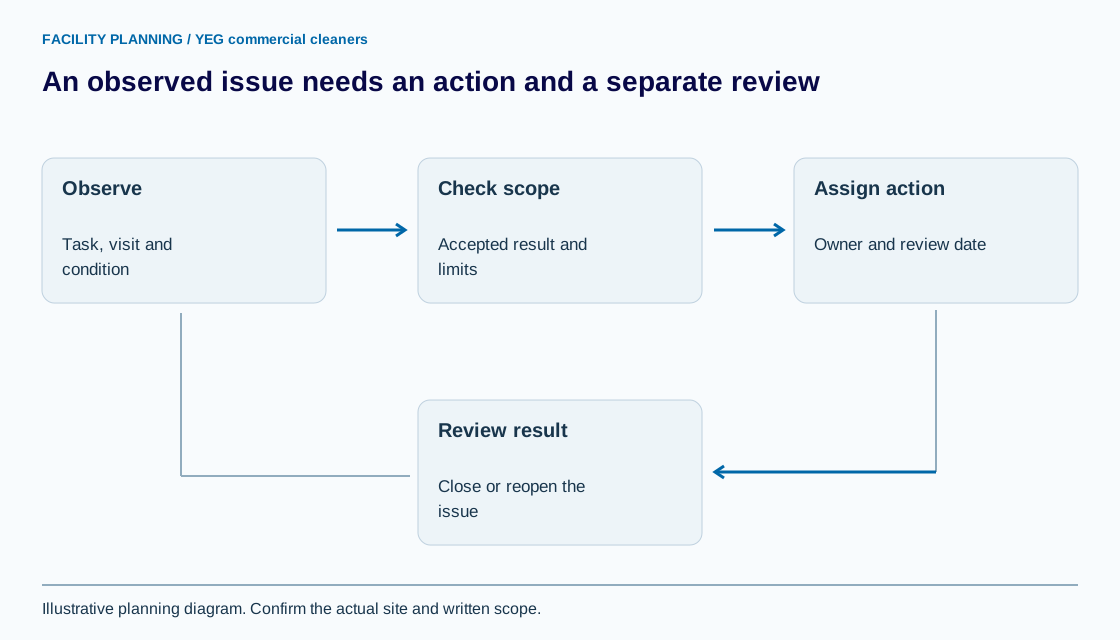
A cleaning issue log connects an observed problem to an agreed action and a review of the result. Keep observations, possible causes and closure decisions separate so an unresolved issue cannot disappear inside a general completion tick.
Open the working recordWhat information makes a cleaning issue actionable?
Record the room, task, visit, observation time and condition that did not meet the accepted scope. Identify whether the note came from an inspection, a staff report or another source. A report is a reason to review; its cause may still be unknown.
Use the inspection checklist for the initial result. This log owns the subsequent conversation, assigned action and closure evidence. Record relevant use of the area since cleaning when known, without guessing who caused the condition.
How do you distinguish missed work from a scope gap?
Compare the observation with the effective scope and access record before classifying the issue. Work that was included but incomplete differs from a task never purchased or a room that could not be entered.
Keep an unknown cause as unknown until reviewed. Route a proposed addition to the scope change process and an entry problem to the missed-access record. Linking those records prevents an extra-work request from being mistaken for a failed task.
How should the corrective action be agreed?
Name the action owner, proposed action, review date and person who can confirm the outcome. Record a site-agreed priority without assigning a universal response time or automatic credit.
The published CIMS 2023 feedback provisions connect complaints, corrective action and customer feedback. This log is a suggested implementation aid, not an adopted service-level agreement. An operational hazard should follow the site response process rather than waiting for an ordinary cleaning-review meeting.
What does a complete issue record look like?
A complete record preserves the original observation and the subsequent review. Synthetic example: issue I-12 records visible debris at an included reception edge, reported Tuesday at 08:00; the reviewer confirms the scope item, records an agreed corrective visit and later records the observed result.
If the area cannot be inspected afterward, the action can be reported complete while verification remains pending. A photograph of one edge does not establish that every room passed. This fictional example illustrates status handling, not a customer incident or service guarantee.
When should an issue be closed or reopened?
Close the issue when the agreed outcome is documented by the designated reviewer, or record another explicitly accepted resolution. Reopen it if the same defined issue returns or the closure evidence is found incomplete; preserve the prior history.
Bring recurring patterns to a service review. YEG commercial cleaners provides a scope-based after-hours program; the log helps a facilities contact explain what needs review without relying on a broad claim that the entire site is poor.
YOUR WORKING DOCUMENT
Cleaning issue action and closure log
Adapt the fields to your facility. These planning entries are editable in this tab. Download your work before leaving; it is not sent to YEG commercial cleaners or saved automatically.
Swipe or scroll across the table to reach every field.
| Issue / task / visit | Observation / source | Classification / unknowns | Action owner / review date | Outcome / closure reference |
|---|---|---|---|---|
A template supports the discussion; the accepted written scope determines the work.
Sources and review
Reviewed September 8, 2026. Source links support the statements beside them. The worksheet is an original planning aid; confirm site requirements and current product instructions before use.
Use this information in your cleaning scope
Use the cleaning inspection checklist to take the next planning step. Identify the quantities, access conditions and exclusions that apply before requesting a price.