FACILITY PLANNING
Commercial Cleaning Invoice Reconciliation
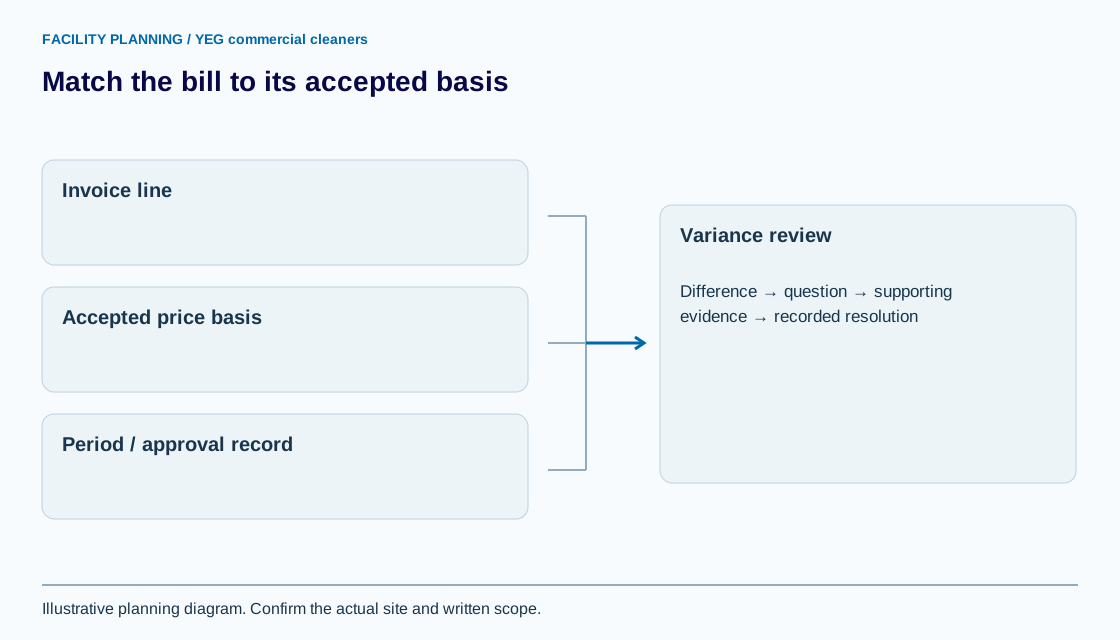
Reconcile a cleaning invoice by comparing each charge with the accepted pricing basis and the records for that billing period. Separate an arithmetic difference from a scope dispute, missing approval or tax question.
Open the working recordWhich records are needed to check a cleaning invoice?
Collect the invoice, accepted price schedule, relevant scope version, billing period and approved changes or credits. Include visit records where the agreement bills by actual visits; do not assume attendance alone determines the amount for every contract.
CRA business-record guidance identifies invoices and supporting documents as transaction records. This worksheet supports an operational check, not tax advice. Use the quote comparison to recover the exact units and inclusions originally accepted.
How does fixed monthly billing differ from per-visit billing?
Fixed monthly billing starts from the accepted period amount; per-visit billing starts from the applicable unit price and billable visit count. Both still require review of changes and exceptions under the agreement.
An average 13 visits per month for three weekly visits is a planning convention, not proof that a particular month contains 13 billable visits. Do not recalculate a fixed fee as if it were automatically a per-visit contract. Confirm the basis before treating a calendar difference as an overcharge.
What does a per-visit reconciliation example show?
A per-visit example can show an arithmetic difference without deciding who owes an adjustment. Synthetic example: an accepted CAD 250 per-visit rate and 12 confirmed billable visits produce CAD 3,000 before GST. An invoice showing 13 visits produces CAD 3,250, a CAD 250 difference to investigate.
The example assumes the 12-visit count is established under that fictional agreement. A no-entry event might have a different agreed treatment. It is not evidence of an actual overcharge, a market rate or an automatic right to withhold payment.
How should credits, scope changes and separate work be checked?
Match every adjustment to an approval or other agreement reference, with the effective date and affected site. Keep periodic work and consumables separate from routine service so a bundled task is not inadvertently billed again.
Use the change request for added work and the access incident for a failed visit. Record tax questions for the finance reviewer instead of using this operational sheet to decide tax treatment.
What should be sent with a billing clarification?
Send the invoice reference, disputed line, accepted basis, supporting record and the specific answer needed. Preserve the original invoice and any later correction rather than overwriting the disagreement.
Share the relevant clarification with YEG commercial cleaners through the agreed business contact. Bring repeated unit or scope ambiguities to a service review so the cleaning program and billing references stay aligned. Record who approved the resolution and when finance completed its review.
YOUR WORKING DOCUMENT
Invoice line and supporting-decision check
Adapt the fields to your facility. These planning entries are editable in this tab. Download your work before leaving; it is not sent to YEG commercial cleaners or saved automatically.
Swipe or scroll across the table to reach every field.
| Invoice / period / line | Accepted basis / expected amount | Billed amount / variance | Supporting visit or approval | Question / resolved outcome |
|---|---|---|---|---|
A template supports the discussion; the accepted written scope determines the work.
Sources and review
Reviewed September 8, 2026. Source links support the statements beside them. The worksheet is an original planning aid; confirm site requirements and current product instructions before use.
Use this information in your cleaning scope
Use the compare commercial cleaning quotes to take the next planning step. Identify the quantities, access conditions and exclusions that apply before requesting a price.